Half Ironman Training Plans Comparison
| Duration | Weekly Volume | Session Distribution | Phase Structure | Common Pitfalls |
|---|---|---|---|---|
| 12 weeks | Depends on athlete | Varied sessions | Basic structure | Neglecting brick workouts |
| 16 weeks | 10-14 hours | Base, Build, Race, Taper | 4 distinct phases | Overtraining without recovery |
| 20 weeks | Gradual increase | Focus on endurance | Longer base phase | Insufficient race-specific practice |
Understanding Half Ironman (70.3) Distances and Terminology
A Half Ironman, also known as a 70.3 triathlon, consists of three main segments: a swim of 1.9 km (1.2 miles), a bike ride of 90 km (56 miles), and a run of 21.1 km (13.1 miles), culminating in a total distance of 113.1 km (70.3 miles)[2]. This format is designed to challenge athletes while remaining accessible to those with a solid fitness foundation.
Race Categories
Triathlon events are typically classified into several categories based on distance. These include:
- Sprint: Shortest distance, ideal for beginners.
- Olympic: Moderate distance, a step up from sprint events.
- 70.3 (Half Ironman): Half the distance of a full Ironman, requiring significant endurance.
- Full Ironman: The ultimate challenge, involving a 3.8 km swim, 180 km bike, and 42.2 km run.
Understanding these categories helps athletes choose the right race according to their experience and fitness level.
Training Phases and Key Metrics
Training for a Half Ironman typically follows a structured approach, divided into four distinct phases:
- Base Phase: Weeks 16-13 focus on building a foundational aerobic capacity.
- Build Phase: Weeks 12-9 enhance endurance and strength through increased intensity.
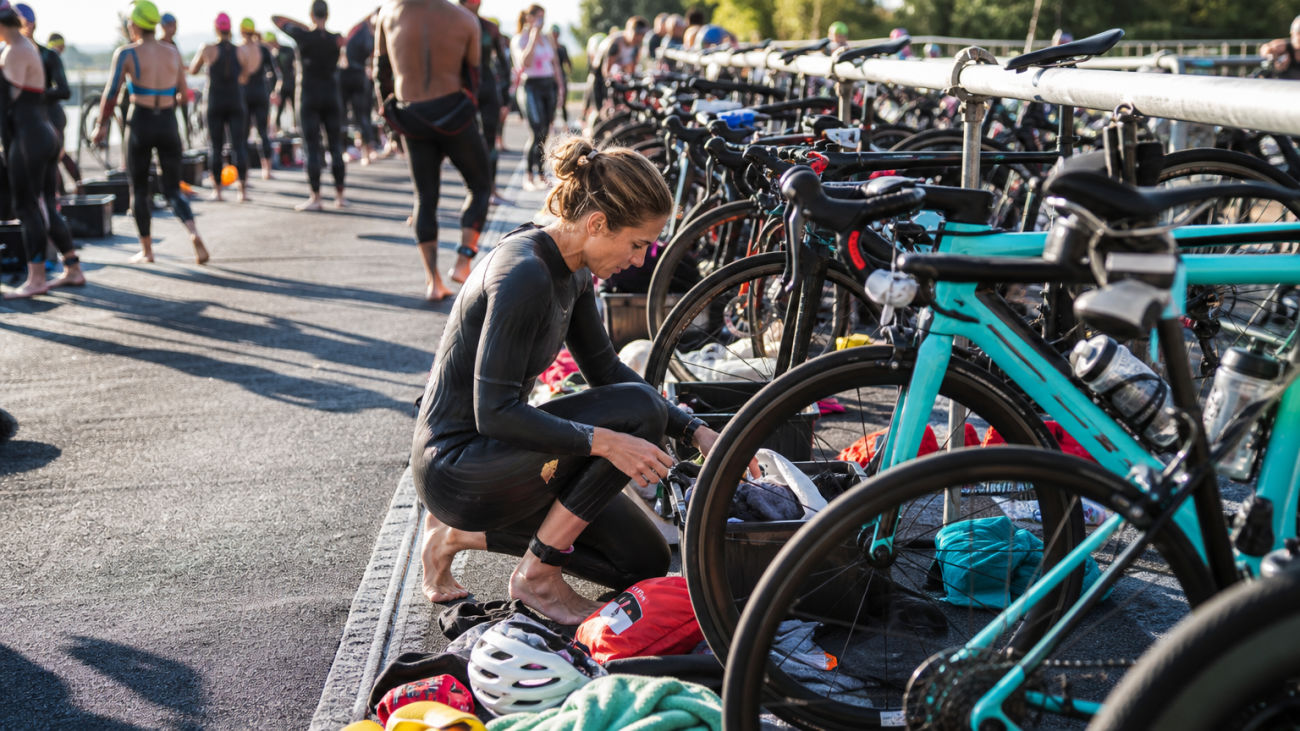
- Peak Phase: Weeks 8-5 emphasise race-specific training, including brick workouts where biking is immediately followed by running[1].
- Taper Phase: Weeks 4-1 allow for recovery while maintaining fitness before race day.
Key metrics to track during training include:
- TSS (Training Stress Score): Measures training load and intensity.
- FTP (Functional Threshold Power): Indicates the maximum power output an athlete can sustain for one hour, crucial for pacing during the bike leg.
- Heart Rate Zones: Understanding these zones aids in training effectively, with Zone 2 being particularly important for building endurance.
Incorporating these elements into training not only prepares the athlete but also minimises the risk of common mistakes, such as neglecting recovery or brick workouts[3].
This structured approach ultimately leads to improved performance and a greater chance of achieving personal bests on race day.
How Long Do You Need to Train for a Half Ironman?
Training for a Half Ironman typically requires between 12 to 20 weeks, depending on your current fitness level and experience. For most athletes with a solid aerobic base, a 16-week plan is recommended as it allows for adequate endurance building without risking burnout[1].
Training Timelines
- 12 Weeks: Suitable for those with a strong fitness background. This plan often requires a high weekly volume from the start, which may lead to fatigue if not managed carefully.
- 16 Weeks: The most common timeframe, ideal for athletes who are already conditioned. This plan includes structured phases that progressively build intensity and volume, peaking at around 10 to 14 hours per week.
- 20 Weeks: Recommended for beginners or those returning from injury. This extended timeline allows for gradual development of aerobic capacity and includes more recovery time, typically peaking at 10 to 14 hours per week as well[4].
Weekly Volume Progression
During training, athletes can expect to see their weekly training volume increase. For instance:
- Weeks 12-9: Focus on building endurance; volume may rise from 8 to 12 hours.
- Weeks 8-5: Race-specific training kicks in, often peaking at 12 to 15 hours, incorporating brick workouts to simulate race conditions.
- Weeks 4-1: Tapering phase reduces volume, allowing the body to recover while maintaining intensity.
Factors Affecting Duration
Several factors influence the training duration needed for a Half Ironman:
- Prior Experience: Newer athletes may benefit from a longer training plan to adapt their bodies to the demands of a 70.3 triathlon.
- Injury History: Those with previous injuries should consider a more gradual approach to prevent re-injury, making a 20-week plan more suitable.
Training effectively requires understanding your body’s limits and recognising when to push harder or allow for recovery. Neglecting rest can lead to overtraining, which is a common pitfall in Half Ironman preparation[3].
Key Training Phases Explained
Training for a Half Ironman involves four key phases: base, build, peak, and taper. Each phase has specific goals and sample weekly structures to guide athletes through their preparation.
Base Phase
The base phase spans weeks 16 to 13. Its primary goal is to develop aerobic capacity and establish a training routine. Athletes typically engage in:
- 2 swims: Focus on technique and endurance, lasting 30-60 minutes each.
- 3 bikes: Long, steady rides, ranging from 1.5 to 3 hours.
- 2 runs: Easy-paced runs of 30-60 minutes.
- 1 strength session: Core and functional strength training.
- 2 rest days: Essential for recovery and adaptation.
This phase lays the groundwork for more intense training ahead and is crucial for avoiding burnout later[1].
Build Phase
Weeks 12 to 9 mark the build phase, where endurance and strength take precedence. The structure typically includes:
- 2 swims: Increasing intensity with interval training.
- 3 bikes: Incorporating hill workouts and tempo rides, lasting 1-4 hours.
- 2 runs: Introducing speed work and longer runs, ranging from 45-90 minutes.
- 1 strength session: Focused on maintaining strength and stability.
- 2 rest days: To allow recovery and prevent overtraining.
The goal here is to increase overall training load while enhancing performance[1].
Peak Phase
The peak phase occurs during weeks 8 to 5, emphasising race-specific training and brick workouts. A sample week might look like this:
- 2 swims: Race pace intervals, up to 1 hour.
- 3 bikes: Longer rides, including bricks (bike followed by run), lasting 2-5 hours.
- 2 runs: Incorporating transition runs, lasting 45-90 minutes.
- 1 strength session: Focused on endurance and injury prevention.
- 2 rest days: Crucial for recovery as intensity peaks.
This phase prepares athletes for the demands of race day, including nutrition and pacing strategies[1][3].
Taper Phase
The final taper phase, from weeks 4 to 1, allows for recovery while maintaining fitness. The training structure generally includes:
- 2 swims: Shorter, focused sessions to maintain technique.
- 3 bikes: Reduced volume, focusing on maintaining intensity for 1-2 hours.
- 1-2 runs: Shorter, easy-paced runs, around 30-60 minutes.
- 1 strength session: Light and focused on mobility.
- 2 rest days: Essential for mental and physical recovery.
The taper phase is crucial for ensuring peak performance on race day, allowing the body to recover fully while keeping the muscles engaged[1][3].
Sample 16-Week Half Ironman Training Plan
A well-structured 16-week training plan for a Half Ironman (70.3) consists of four distinct phases, allowing athletes to build endurance while minimising the risk of burnout. Each week features a mix of swim, bike, and run sessions, adhering to the 80/20 rule, where 80% of workouts are at low intensity and 20% at high intensity.
Weekly Breakdown
Weeks 16-13: Base Phase
- Goal: Develop aerobic capacity.
- Sessions:
- 2 swims (30-60 minutes each)
- 3 bike rides (1.5-3 hours each)
- 2 runs (30-60 minutes at easy pace)
- 1 strength session (30-45 minutes)
- 2 rest days
Weeks 12-9: Build Phase
- Goal: Enhance endurance and strength.
- Sessions:
- 2 swims (30-60 minutes, including intervals)
- 3 bike rides (1-4 hours, incorporating hill workouts)
- 2 runs (45-90 minutes, including speed work)
- 1 strength session (45 minutes)
- 2 rest days
Weeks 8-5: Peak Phase
- Goal: Race-specific training with brick workouts.
- Sessions:
- 2 swims (1 hour, race pace intervals)
- 3 bike rides (2-5 hours, including bricks)
- 2 runs (45-90 minutes, transition runs)
- 1 strength session (45 minutes)
- 2 rest days
Weeks 4-1: Taper Phase
- Goal: Recovery while maintaining fitness.
- Sessions:
- 2 swims (30-45 minutes, technique-focused)
- 3 bike rides (1-2 hours, reduced volume)
- 1-2 runs (30-60 minutes at easy pace)
- 1 strength session (30 minutes, light)
- 2 rest days
Intensity Distribution and Recovery
Maintaining the 80/20 intensity rule is essential throughout training. This means that most workouts should be conducted at an easy pace, allowing the body to recover and adapt. Recovery weeks should be integrated every three to four weeks, reducing overall volume by 20-30% to prevent overtraining, which can lead to fatigue and injury[3].
Incorporating brick workouts—where a bike session is immediately followed by a run—prepares athletes for the neuromuscular demands of race day[3]. This strategy is crucial for developing the pacing and transition skills needed for a successful 70.3 triathlon.
By adhering to this 16-week plan, athletes can expect to build the necessary endurance and strength to complete a Half Ironman successfully, with the average finish time for first-timers typically ranging from 6 hours 30 minutes to 8 hours[2].
Sample 20-Week Half Ironman Training Plan for Beginners
A 20-week training plan is ideal for beginners, allowing gradual adaptation to the demands of a Half Ironman (70.3) triathlon. This plan starts with lower volume and progressively increases intensity, ensuring a solid foundation without overwhelming the body.
Training Phases Overview
The training plan is divided into four phases:
- Base Phase (Weeks 20-16): Focuses on building aerobic capacity.
- Build Phase (Weeks 15-10): Enhances endurance and strength.
- Peak Phase (Weeks 9-5): Emphasises race-specific training and brick workouts.
- Taper Phase (Weeks 4-1): Allows for recovery while maintaining fitness before race day.
Weekly Schedule Example
A typical week during the Base Phase may include:
- 2 swims: 30-45 minutes focusing on technique.
- 3 bike rides: 1-2 hours at an easy pace.
- 2 runs: 30-45 minutes at an easy pace.
- 1 strength training session: 30-45 minutes focusing on core and functional strength.
- 2 rest days: Essential for recovery.
As training progresses into the Build Phase, the schedule adapts:
- 2 swims: 45-60 minutes with interval training.
- 3 bike rides: 1.5-3 hours, including hill work.
- 2 runs: 45-90 minutes, incorporating speed work.
- 1 strength training session: 45 minutes.
- 2 rest days.
During the Peak Phase, the introduction of brick workouts is crucial:
- 2 swims: 1 hour focusing on race pace.
- 3 bike rides: 2-4 hours, including bricks (bike followed by run).
- 2 runs: 1 hour, including transition runs.
- 1 strength training session: 45 minutes.
- 2 rest days.
In the Taper Phase, the focus shifts to recovery:
- 2 swims: 30-45 minutes, maintaining technique.
- 3 bike rides: 1-2 hours, with reduced intensity.
- 1-2 runs: 30-60 minutes at an easy pace.
- 1 strength training session: 30 minutes, light focus.
- 2 rest days.
Commitment and Volume
Athletes can expect to commit around 5-10 hours per week initially, gradually increasing as they progress through the phases. This approach allows for adequate recovery and adaptation, reducing the risk of overtraining[3].
Incorporating brick workouts is vital; these sessions mimic race conditions and help prepare the body for the unique demands of transitioning from biking to running[3].
Following this structured 20-week plan equips athletes with the endurance, strength, and skills necessary to complete a Half Ironman successfully, with first-time finishers typically completing the race in 6 hours 30 minutes to 8 hours[2].
Common Training Mistakes and How to Avoid Them
Overtraining is a prevalent issue among Half Ironman participants. It occurs when the training load exceeds the body’s ability to recover, leading to fatigue and decreased performance. Incorporating scheduled recovery days is crucial, as adaptation primarily happens during rest[3]. Athletes should aim for at least one full rest day per week, especially during intense training phases.
Neglecting recovery can result in increased injury risk and burnout. Signs of overtraining include persistent fatigue, decreased performance, and irritability. To counteract this, athletes can monitor their Training Stress Score (TSS) and adjust their training loads accordingly. If TSS consistently rises without adequate recovery, it’s time to back off and allow the body to recuperate.
Improper pacing is another common mistake. Many athletes start too fast, leading to exhaustion before the race’s end. Training in specific heart rate zones, particularly Zone 2, helps develop aerobic capacity and endurance[1]. Athletes should practice pacing during long training sessions to establish a sustainable speed for race day.
Swim technique is often overlooked, which can severely impact performance. Focusing on form and efficiency during swim workouts is essential. Regularly incorporating drills that enhance technique can yield significant improvements. Athletes should consider video analysis or coaching to identify and correct flaws in their stroke.
Brick workouts are vital for preparing for the transition from biking to running. Ignoring these can leave athletes unprepared for the unique challenges of race day[3]. A well-structured brick session should include a bike ride immediately followed by a run, allowing the body to adjust to the demands of transitioning.
To summarise, avoiding these common pitfalls involves a strategic approach to training, focusing on recovery, pacing, swim technique, and brick workouts. By recognising the signs of overtraining and implementing corrective actions, athletes can fine-tune their preparation for a successful Half Ironman experience.
What Is a Respectable Half Ironman Finish Time?
A respectable finish time for a Half Ironman, officially known as an IRONMAN 70.3, varies by age group and gender. Analysis of over 67,000 finishers indicates that the average finish time is approximately 6 hours, with the swim taking around 45 minutes, the bike 3 hours, and the run 2 hours and 15 minutes[5]. For age-group athletes, a finish time under 6 hours is generally considered respectable, while completing the event in under 5 hours signifies a strong performance, well above historical averages[6].
Average Finish Times by Age Group and Gender
According to recent data, the mean finish times for men and women across various age groups are as follows:
- Men: Average finish time of 5:46:53
- Women: Average finish time of 6:16:18
These numbers yield a weighted overall benchmark of approximately 5:53:58[6].
First-time participants often finish within 6 hours 30 minutes to 8 hours, with an overall cutoff typically set at 8 hours 30 minutes[2].
Factors Influencing Finish Times
Several factors can affect finish times, including:
- Course Difficulty: Hilly or technical courses can slow down athletes.
- Weather Conditions: Extreme temperatures or wind can impact performance.
- Nutrition: Proper fuelling is essential; contemporary guidelines recommend 70–90 grams of carbohydrates per hour during the race, with pre-race carb loading of 10–12 grams per kilogram of body weight for 36–48 hours before the event[7].
Understanding terms like "negative split" and "bonking" is also helpful. A negative split refers to completing the second half of a race faster than the first, which is often a sign of good pacing and endurance. Bonking, on the other hand, describes a state of extreme fatigue due to inadequate carbohydrate intake, which can severely hinder performance.
Athletes should focus on strategies to avoid bonking and work towards achieving negative splits during training. This approach helps in managing energy levels effectively throughout the race.
Nutrition and Recovery Strategies for 70.3 Training
Proper nutrition and recovery strategies are vital for optimising performance during Half Ironman training. These elements not only support endurance but also enhance recovery, ensuring athletes can tackle the demands of a 70.3 triathlon.
Fueling During Long Sessions
During long training sessions, athletes should aim to consume carbohydrates to maintain energy levels. Contemporary sports nutrition guidelines recommend 70–90 grams of carbohydrates per hour during a 70.3 race. This intake is particularly crucial on the bike, where higher amounts (30–60 grams per hour) can be more easily consumed than during running[7]. For preparation, athletes should engage in pre-race carb loading, consuming 10–12 grams of carbohydrates per kilogram of body weight per day for 36–48 hours leading up to the event.
Race-Day Nutrition
On race day, timing and choice of nutrition matter significantly. Consuming a light meal rich in carbohydrates about three hours before the race can provide a solid energy base. During the race, utilise energy gels, bars, or drinks that fit within the recommended carbohydrate range. Practicing this nutrition strategy during long training sessions is essential to avoid gastrointestinal distress on race day.
Hydration Concepts
Hydration strategies should be tailored to individual needs and environmental conditions. A general guideline is to drink approximately 500–750 ml of fluid per hour, adjusting based on sweat loss and temperature. Electrolyte drinks can help replace lost salts, particularly during longer bike and run segments.
Recovery Methods
Recovery is equally important in a training plan. Adequate sleep is crucial, with 7–9 hours per night recommended for optimal recovery. Mobility work, including stretching and foam rolling, can enhance flexibility and reduce muscle soreness. Active recovery, such as light swimming or cycling, can also aid in the recovery process by promoting blood flow without adding significant fatigue.
Example Carbohydrate Targets and Post-Workout Protocols
Post-workout, aim to consume 1.0–1.5 grams of carbohydrates per kilogram of body weight within 30 minutes of completing a session. This replenishes glycogen stores effectively. Pair this with protein intake (approximately 20 grams) to support muscle repair.
In summary, integrating these nutrition and recovery strategies into a training plan enhances performance and prepares athletes for the challenges of a Half Ironman, ensuring they are well-equipped for race day.
Customizing Your Half Ironman Training Plan
Adjusting a Half Ironman training plan to fit personal schedules, weaknesses, and goals is crucial for optimal performance. Individualisation ensures that the training is effective and sustainable.
Tailoring to Your Schedule
Begin by assessing your weekly commitments. A standard 16-week plan typically involves 5-10 hours of training per week, but this can be adjusted. If time is limited, consider a 20-week plan, which allows for gradual progression and can peak at 10-14 hours weekly, helping to prevent injury and burnout[4].
Addressing Weaknesses
Identify your weaknesses, particularly if you are a swim-limited athlete. If swimming is your challenge, allocate more time to technique-focused swim sessions. For example, you might increase swim workouts from twice to three times a week, dedicating at least one session to drills that improve stroke efficiency.
Setting Goals
Your goals will influence how you customise your training. If aiming for a competitive finish, incorporate specific workouts targeting your functional threshold power (FTP) and VO2max. For instance, include interval training sessions that push your limits, such as 5-minute efforts at 90-95% of your maximum heart rate, followed by equal rest periods. This type of training enhances both speed and endurance, essential for a successful 70.3 triathlon.
Decision Framework
When personalising your training plan, consider the following framework:
Base Phase (Weeks 16-13): Focus on building aerobic capacity. This is the time for Zone 2 training, where you maintain a steady pace that allows for conversation.
Build Phase (Weeks 12-9): Start incorporating strength and endurance workouts. Engage in threshold training, where you work at or near your lactate threshold to improve performance.
Peak Phase (Weeks 8-5): Introduce brick workouts to simulate race conditions. For example, after a bike session, follow it immediately with a run to adapt your body to transitioning.
Taper Phase (Weeks 4-1): Reduce training volume while maintaining intensity to allow for recovery before race day. This phase is crucial for ensuring peak performance.
Practical Example
For a swim-limited athlete, a weekly schedule might look like this:
- 3 swims: 45-60 minutes focusing on technique and endurance.
- 3 bike rides: 1.5-3 hours, with one session dedicated to FTP intervals.
- 2 runs: 45-90 minutes, incorporating speed work within the sessions.
This tailored plan respects individual needs while ensuring all aspects of fitness are developed.
Customising your Half Ironman training plan is essential for addressing personal strengths and weaknesses, setting realistic goals, and fitting training into your lifestyle effectively.
Conclusions
- Monitor Training Stress Score weekly to prevent overtraining; reduce volume when TSS rises without recovery.
- Train in Zone 2 during long sessions to build aerobic capacity and avoid early exhaustion from poor pacing.
- Include regular swim drills and consider video analysis to improve stroke efficiency before race day.
- Schedule brick workouts every two weeks so the body adapts to the bike-to-run transition.
- Customise the 16-week or 20-week plan around personal weaknesses and available time in Boulder.
Review the linked resource next to match your current fitness level: Triathlon Training Schedules: Finding Your Perfect Fit.
Still wondering?
How long do I need to train for a half iron man?
Most athletes with a solid aerobic base require 16 weeks to prepare for an IRONMAN 70.3. This timeframe supports endurance building without burnout when the reader follows structured phases. A 20-week schedule suits beginners better as it allows gradual base development and peaks at 10 to 14 hours per week. Shorter plans do not work when the reader lacks prior fitness.
What is a good training schedule for a 70.3 Ironman?
The 16-week plan divides into base from weeks 16 to 13, build from weeks 12 to 9, race-specific from weeks 8 to 5, and taper from weeks 4 to 1. Each phase raises volume then intensity with bricks and race simulation. The reader must add recovery days to avoid accumulated fatigue that raises injury risk. This structure fits athletes in Boulder who train five to ten hours weekly.
What is a respectable time for a half ironman?
A finish under six hours counts as respectable for age-group athletes while sub-five hours marks strong performance. Data from over 67,000 finishers shows an average of six hours with the swim at 45 minutes, bike at three hours, and run at two hours 15 minutes. Men average 5:46:53 and women 6:16:18 across large records. These benchmarks help the reader set realistic targets without chasing elite times.
Half ironman triathlon training plan 12 weeks
A 12-week schedule compresses the build and race-specific phases yet still follows the four-phase model. It demands the reader already holds a strong aerobic base from prior training. Peak volume reaches similar levels to the 16-week plan but with less recovery time built in. This option works only when the reader can handle higher intensity from the start.
Half ironman triathlon training plan 16 weeks
Sixteen weeks remains the standard recommendation for athletes with an aerobic foundation. The plan progresses from aerobic capacity in the base phase to threshold work then bricks that mimic the 1.9-kilometre swim, 90-kilometre bike, and 21.1-kilometre run. The reader should schedule recovery after every hard block because adaptation occurs during rest. Local Boulder events often align with this timeline under 2025 IRONMAN rules.
Half ironman triathlon training plan pdf
Official plans appear in structured formats that detail weekly hours and session types across the four phases. The reader can adapt the 16-week outline by noting swim, bike, and run targets then tracking them in a simple spreadsheet. Always cross-check against the specific Athlete Information Guide for the chosen 2025 event. This approach lets the reader build a personalised version without relying on generic downloads.
Sources consulted
- 1
- IRONMAN 70.3 Training Plan: A Practical 16-Week Guide | IRONMAN
- 2
- IRONMAN Distances Explained: How To Pick Your Perfect Race | IRONMAN
- 3
- Top 10 Training Mistakes to Avoid Before Your Triathlon - SunTri
- 4
- How Far Is a Half Ironman? Distance, Times and What to Expect
- 5
- Good Triathlon Time: Averages By Distance, Age + Gender
- 6
- Average Half Ironman Time: Age Groups, Men, Women & Splits
- 7
- 70.3 Nutrition Plan: The Complete Half Ironman Guide